

The Trap
Steve Hanson, Jeffrey Epstein, and the word at the center of the DOJ archive.

A Plainsite investigation. All findings drawn from documents in the official DOJ public release and public financial records. Plainsite makes no allegations beyond what those documents contain
I. The Man He Trusted
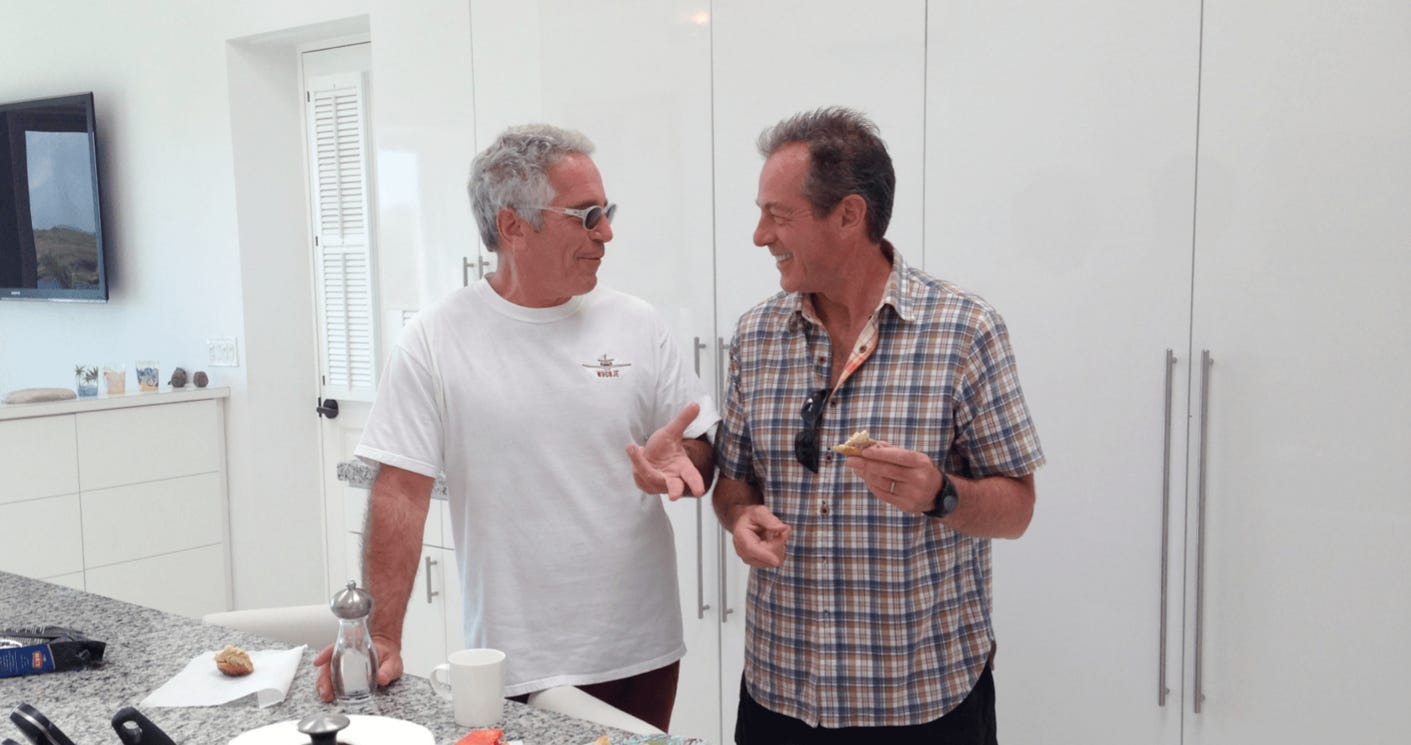
Between June 2014 and July 2016, Steve Hanson, founder of BR Guest Hospitality and one of New York’s most prominent restaurateurs, sent a series of emails to Jeffrey Epstein about a woman. Not to his lawyer. Not to a therapist. Not to a close family member. But to Jeffrey Epstein.
The emails, now part of the official DOJ document release, trace a two-year arc in which Hanson grows increasingly frightened, increasingly obsessive, and increasingly reliant on Epstein’s counsel about a woman he had been involved with for a decade. They also trace something else. The gradual construction of a narrative weapon, the label of liar, the label of blackmailer, deployed against a woman before she has said a single public word.
What emerges from reading these emails in sequence is a portrait of two men who share the same fundamental instinct when a woman threatens their control. Discredit her first. Build the story. Get ahead of the truth.
“there is no one else I would trust with this nightmare”
Stephen Hanson to Jeffrey Epstein, May 1, 2016 (EFTA02463523.pdf)
One of those men was a convicted sex offender who trafficked girls across international borders and whose estate would ultimately pay hundreds of millions in settlements to his victims. The other man chose him, above everyone else in his life, as the one person he could trust.
The woman at the center of these emails is never named in the documents. She is, instead, given a sequence of labels, each one tracking how Hanson’s framing of her hardens over time. In June 2014, when Epstein first references her, she is simply “the girl.” In January 2016, she is “the girl I have known for awhile.” In February, Hanson locates her in his own past for the first time, writing in his own words, “who I have known for many years, actually from when I had my hotel in Scottsdale and she and her friends would hang around.” By March 2016, in a 3 AM panic email, she has become “that girl from Scottsdale,” “a rotten bitch,” and “a total psychopath.” In May, she is again “that girl I told you about from Scottsdale.” By July, after Epstein has coached him through the framing, she is reduced to “the California person,” a label so abstract it removes her from gender, history, and place entirely.
She is systematically dehumanized through abstraction, even as the evidence of their relationship accumulates in the very act of describing it. He never calls her a woman. Not once. In thirteen documents spanning two years, she is always “the girl,” or worse.
What the documents establish, in Hanson’s own words, is that he had known her for a decade. He lent her money to purchase a diamond ring. He funded horses. He fielded her calls almost daily. He had been paying for her life, or a significant portion of it, for long enough that he calls the situation a “trap,” a word that appears across multiple emails, always describing the situation, never his own choices that created it.
He never once asks what she needs. He never expresses concern for her wellbeing. She is described exclusively in terms of the inconvenience she causes him. A nightmare. A trap. A source of panic that wakes him at 3 in the morning. Not concern for her. Concern for himself.
II. Five Documents
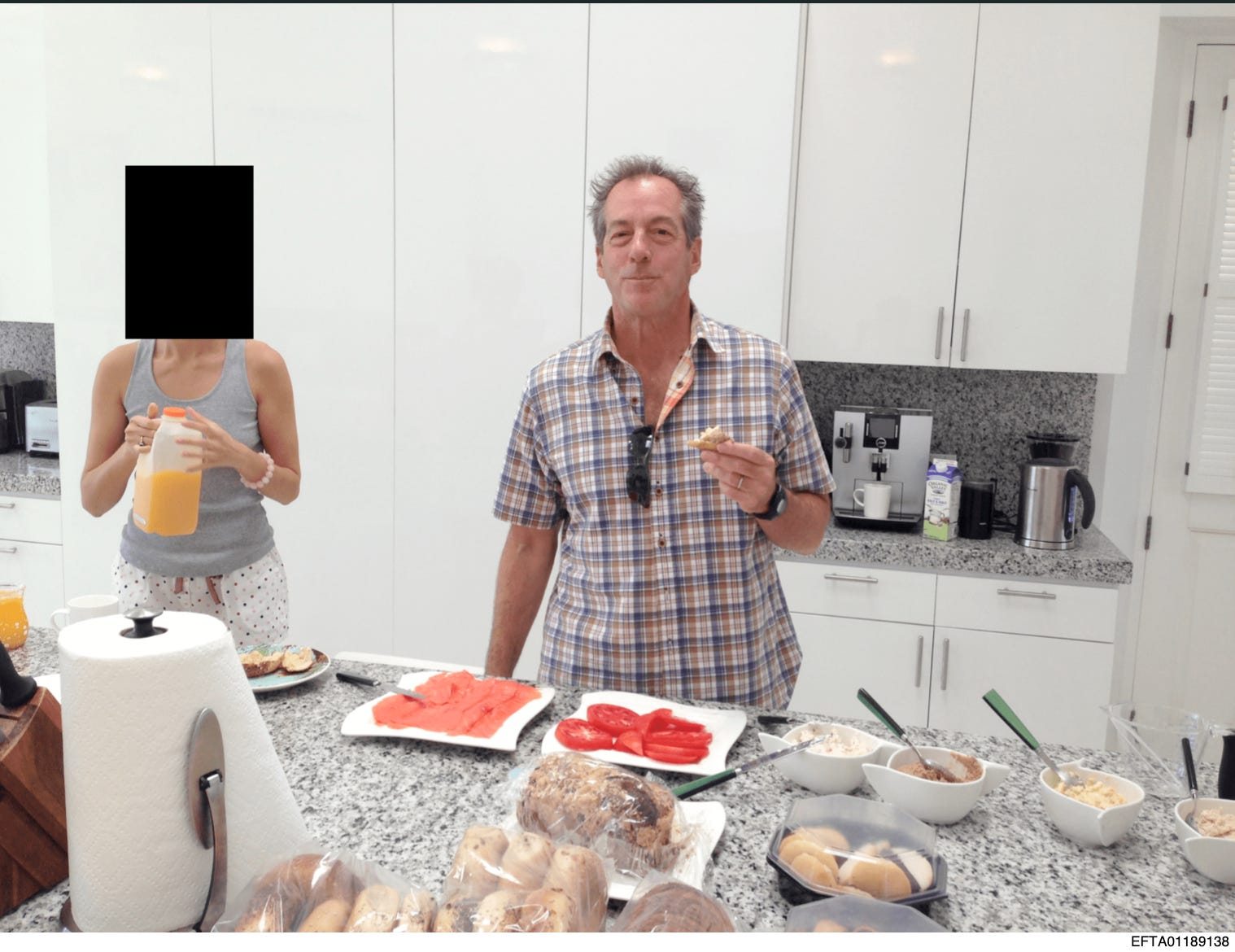
What follows is the full arc, in order. Five emails. Twenty-five months. One pattern.
June 25, 2014. Epstein already knows. In the middle of a condolence chain about a mutual acquaintance’s death, Epstein inserts a single casual line. “yes i know, how s the girl” (EFTA00667046.pdf ). No clarification. No “which girl.” He already knows her, and Hanson’s response is, “I’m in Tahoe, business.” He does not answer the question. By June 2014, this woman is already a standing topic between these two men. Hanson had no active company at this point. BR Guest had been sold. There is no documented business reason for Hanson to be in Tahoe in June 2014.
January 7, 2016, 3:16 AM. The diamond ring. Eighteen months later, Hanson contacts Epstein again. Subject line, “Need to talk to you.” The email arrives at 3:16 in the morning (EFTA02477498.pdf). He frames a diamond ring as a loan she never repaid. The sums and the daily calls accumulate into a portrait of a man who has been paying for years and is starting to panic. He does not say, “I made a mistake.” He says, “some bs story being said about she and I.” The story exists. He needs Epstein to help him get ahead of it.
February 6, 2016. The Scottsdale origin, confirmed. Four weeks later, Hanson writes again. Subject, Jeffrey. This email does something none of the others do. It confirms exactly where this began. In his own words, “who I have known for many years, actually from when I had my hotel in Scottsdale and she and her friends would hang around”(EFTA02392003.pdf). The James Hotel Scottsdale opened in 2004 and sold in 2006. That places the start of this relationship at approximately 2004 to 2005, consistent with his “10 years ago” reference one month later. This email is also where he names Brynn, his eldest daughter, for the first time. Epstein now has a named reference. Ten months later, Hanson will bring Brynn, then 15, to meet Epstein privately. That visit is the subject of Part 2.March 13, 2016. The Scottsdale panic. Subject, Jeffrey (EFTA00634942.pdf). He wakes up in a panic. He describes the relationship as “started out 10 years ago as a business deal,” placing the origin at 2006, his Scottsdale years. He admits the core truth in his own words, “years ago I made the decision to keep the bs business going rather than take the chance that she attacks the family.” He has been paying for a decade. To prevent her from speaking. This is hush money in everything but name. In the same email, the language hardens. She becomes “that girl from Scottsdale,” “a rotten bitch,” “a total psychopath.” He mentions his daughters as “especially” important. His wife Deana is not referenced. She is not part of his moral accounting.
May 1, 2016. “How are you,” the disguised subject. The subject line reads “How are you” (EFTA02463523.pdf). The email contains nothing about how Epstein is. It is entirely about the Scottsdale woman and Hanson’s escalating fear. He has disguised the subject because he does not want a paper trail with her name on it. He is still waking at 3 AM. He still calls it a trap. Now he imagines dying and not being there to defend himself. He worries about his daughters’ perception of him. He does not mention his wife. And he writes the line that gives this entire investigation its name, “there is no one else I would trust with this nightmare.” The man he is writing to has, by this point, served time for soliciting prostitution from a minor.
July 30, 2016. The script arrives. On July 3, Hanson emails Epstein about “the California person,” horses, phone calls, 3000 miles away. Still “the trap I’m in.” He asks for a way out of the “horrible situation.” On July 30, Epstein replies (EFTA02458203.pdf). This is the moment the coaching completes. Hanson came to Epstein over two years with vague anxiety, with self-pity, with “rotten bitch” and “psychopath.” Epstein sends him back with a weapon. Epstein tells him she is a blackmailer. Tells him to cut her off completely. And references, explicitly, operations in China that “are set up to only do that.” To get rid of female blackmailers.
“its a shame you cant send her to another country where they deal with blackmailers more effectively. in china there are cos that are set up to only do that.”
Jeffrey Epstein to Stephen Hanson, July 30, 2016 (EFTA02458203.pdf)
This is the arc. Hanson arrived with a personal mess and a vocabulary of insult. Epstein refined the vocabulary into a strategy and, in the final email, gestured at infrastructure for making women like her disappear. Hanson did not flinch from the suggestion. He did not write back to clarify. He did not break the correspondence. He absorbed it.
III. What “Lies” Really Means
Across thirteen documents, Hanson never once denies the relationship existed. Not in the 3:16 AM email. Not in the Scottsdale confession. Not in the “how are you” email that is not about how Epstein is. He never once writes the sentence “nothing happened.”
What he says, instead, is that she is lying about someone, and that those lies are “something more than a business thing going on.” He needs to neutralize a specific claim she is making about him. He does not name the claim. He does not refute the claim. He simply moves the frame. “She lies” becomes the structure he is asking Epstein to help him build.
He chose his phrase carefully. “Keep the bs business going rather than take the chance that she attacks the family.” He paid so she would not speak. This is the working definition of hush money.
Who he was protecting was himself. Always and only himself. The daughters appear in the emails not as people he is shielding from a predator, but as the audience he cannot afford to lose. “Especially my daughters” is not concern for their safety. It is concern for the image they hold of him. He worries the truth will “create psychological effects” in them, not that the truth itself is true, but that they might hear it. He is afraid of dying before he can finish constructing the story. Before he can teach his daughters what to believe.
This is the pattern that runs through every email. Hanson never once takes responsibility for his own conduct. The woman is a trap. The situation is a nightmare. The money is a business deal. The years of payments are something that “started out,” passive voice, no actor, “as a business deal.” He never writes, “I made a choice. I created this. I am the reason this exists.”
It is the same pattern that surfaces later in his business correspondence. In his BR Guest separation, Barry Sternlicht calls his demand for a $2.5 million payment, in writing, “your $2.5m blackmail payment.” In Hanson’s telling, Sternlicht is the unreasonable one. In the collapse of the Life Hotel and its restaurant Henry, his partner David Mitchell is the one mishandling money. In Hanson’s telling, Mitchell is the problem. Epstein himself, when the books at Life Hotel begin to show what Epstein in his own words calls “sooo many funky numbers,” advises Hanson to sell before the audit can proceed. In Hanson’s telling, the audit is the threat, not what the audit might find.
It is always the other person. The woman. The partner. The auditor. The girl from Scottsdale, the rotten bitch, the psychopath, the blackmailer. The cast of villains rotates. The protagonist is always blameless.
The person he chose to help him maintain that story was a convicted sex offender. Not a lawyer. Not a therapist. Not a priest. A man whose expertise was how to make young women with inconvenient stories stop talking. By 2008, Jeffrey Epstein had pleaded guilty in Florida to soliciting prostitution from a minor, a state felony. He was required to register as a Tier 1 sex offender. He served 13 months under a controversial non-prosecution agreement so lenient it would later be condemned across the political spectrum and contribute to the resignation of a U.S. Labor Secretary who had signed off on it as a federal prosecutor.
During that 13-month sentence, Stephen Hanson was on Epstein’s approved visitor list at the Palm Beach County Stockade (EFTA00315076.pdf). He did not stop being Epstein’s friend when Epstein went to jail for sex crimes against a minor. He went to see him there.
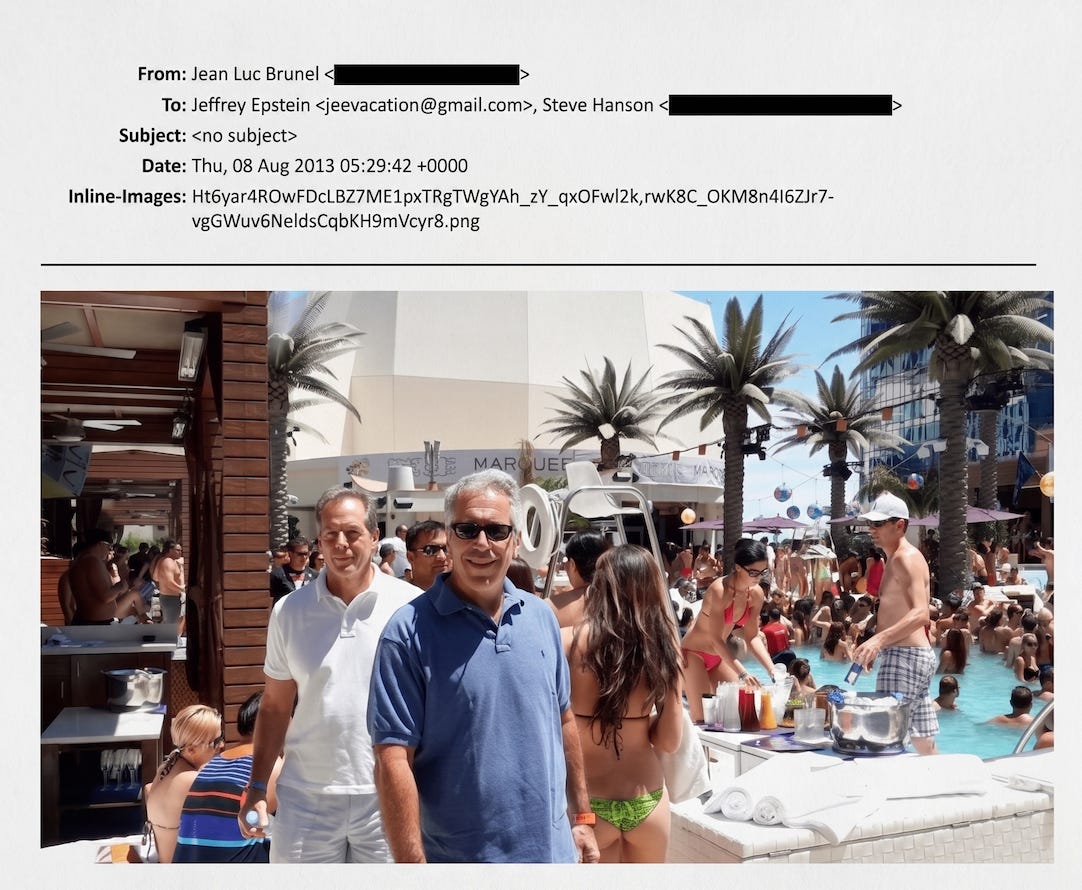
Between 2014 and 2016, the exact window of the Scottsdale correspondence, Epstein’s status was not hidden. It was a matter of public record, reported in the press, searchable on any sex-offender registry. Anyone could find it. Hanson did not need to be told. He also did not need to be told what was alleged about Epstein beyond the 2008 conviction. He was told directly, in writing, by Epstein himself.
On Sunday, November 6, 2016, two days before the presidential election, Epstein emailed Hanson a Daily Mail article (EFTA01738461.pdf). The article reported the dismissal of Katie Johnson v. Donald J. Trump and Jeffrey E. Epstein, a federal lawsuit filed by a woman who alleged that Epstein and Donald Trump had raped her in 1994, when she was 13 years old. The suit was withdrawn days before the election after the plaintiff said she had received threats.
Epstein chose to share that news with Hanson. Hanson’s reply, in its entirety, was one word and a follow-up question.
“Glad. U free at all.”
He did not ask whether the allegations were true. He did not ask his friend whether he had done what he was accused of. He did not say he was sorry the woman had withdrawn the suit, or sorry she had ever needed to bring it. He said he was glad. One word. Then he asked when they could talk.
That word is a small mirror of the Scottsdale correspondence. There, Hanson was the one who needed an accusation to go away. Here, his friend needed the same thing. The response is identical. “Glad. Let’s talk about something else.”
That choice, not an accident, not a moment of weakness, but a repeated, documented, two-year return to the same man for the same kind of counsel, is not collateral to the story. It is the story.
IV. The Wife He Never Mentions
There is a woman who appears in none of these emails. She is not the Scottsdale woman. She is the woman Hanson was married to.
Across thirteen emails spanning 2014 to 2016, discussing fear, money, a decade-long relationship with another woman, and what Hanson framed as his moral reckoning, Hanson names his wife exactly once. In a forwarded chain. In passing. About stock in a vitamin company.
Deana Hanson is the mother of his children. She is the woman most directly affected by a decade of payments to another woman. She appears in the broader correspondence, in passing references, dinner arrangements, a note that she was away with Brynn and he realized he missed them. She exists in his world. She is simply not part of his crisis planning.
Across the Scottsdale emails specifically, the thirteen documents in which Hanson is constructing his response to the woman who might speak, Deana never appears as a reason. Not as someone he is protecting. Not as someone he fears finding out. Not as someone he considers telling the truth to. Not once does he write: “Deana cannot know this.” Not once does he write: “I owe her an explanation.” Not once does he frame the Scottsdale woman’s silence as something he needs for his wife’s sake.
The daughters appear six times as the explicit reason for concealment. The phrase “the family” appears four times, always meaning him and his daughters. Deana, the woman most directly wronged by a decade of payments to another woman, is never named as a consideration in that accounting.
This is not an oversight. It is not the kind of omission a man makes by accident. It is a decision. Deana is not part of his moral accounting because Deana was never the audience. The daughters were the audience, the future audience, the one he was constructing the story for. Deana was the woman already inside the marriage, already paying her own kind of cost, already in possession of whatever truth was between them.
She does not need to be lied to in these emails because she has already been lied to. For years. For a decade.
She is, in the language of the documents, the woman the lies are no longer for.
V. What the Documents Prove, in His Own Words
These are six facts that are not subject to interpretation.
One: a relationship lasting a decade. Hanson’s own phrase, “started out 10 years ago as a business deal.” Origin, Scottsdale, 2006. His own hotel. The woman and her friends “would hang around.”
Two: payments made to silence. “Keep the bs business going rather than take the chance that she attacks the family.”Payments made specifically to suppress speech. Hush money by definition.
Three: protection of his own image, not his daughters’ safety. “Especially my daughters.” Six emails cite the daughters as the reason for concealment. Zero cite the wife. The threat he is managing is not what someone might do to his daughters. It is what his daughters might learn about him.
Four: 3:16 AM. The tone of the January 7, 2016 email is not a business inquiry. It is a man in crisis, writing before dawn, seeking a fixer.
Five: thirteen emails on this topic across twenty-five months. A sustained correspondence with a convicted sex offender, selected, chosen, returned to. Not an accident.
Six: the China response. Epstein, on July 30, 2016, writes that there are companies in China “that are set up to only do that,” to get rid of female blackmailers. Hanson is given a script. He accepts it.
These are not allegations. They are the record.
VI. The Daughter He Never Worried About
In the preceding sections, Stephen Hanson invoked “especially my daughters” six times as the reason he had to suppress a woman’s story.
What he does next cannot be reconciled with that fear.
The man he described as “the only one I would trust with this nightmare,” the convicted sex offender he chose as his confidant, was invited into his family. Not kept out of it.
Brynn Hanson, his eldest, was 15 years old during the period these emails document. She was a student at Marymount School in Manhattan. She was an academic. She rode horses. She joined clubs and built a college résumé.
Across April 2015 to December 2016, the exact same window as the Scottsdale correspondence, seven documented emails in the DOJ archive coordinate contact between Brynn and Jeffrey Epstein. School project advice. College advice. Term paper topics. Cosmetic demonstrations. A Thanksgiving Day visit. A holiday gift exchange.
This is the contradiction this series documents. A father whose stated fear was that his daughters would learn something was, in the same period, bringing his eldest daughter into the home of the man he trusted with that fear.
He did not protect Brynn from Epstein. He brought her to him.
VII. Seven Emails
April 4, 2015. The school project. Hanson emails Epstein, “Brynn / oldest would like your advise on a school team project. We have horse back riding but can be to u anytime after 130, so what is best” (EFTA00644503.pdf).
Stephen Hanson is a graduate of NYU’s Stern School of Business. He built a restaurant empire generating $200 million in annual revenue. He negotiated multi-million-dollar transactions and managed hundreds of employees. His family foundation lists Marymount School, one of Manhattan’s most exclusive Catholic girls’ schools, among its grantees in public IRS tax filings.
According to the DOJ documents, her father could not help her brainstorm a school team project without consulting a man with no children, no academic credentials, and a federal conviction for soliciting prostitution from a minor.
April 5, 2015. “Be there in 10. With brynn.” The following evening, Sunday, April 5 at 10:19 PM, someone sent Epstein a five-word text: “Be there in 10. With brynn.” (EFTA02505763.pdf).
The sender’s identity is completely redacted in the DOJ archive. The email address field is blank. The metadata lists the sender as Unknown.
A teenage girl. Sunday night. After 10 PM. Arriving at Jeffrey Epstein’s home.
January 6, 2016. College advice. Hanson emails Epstein multiple items. He opens by noting he has a serious situation to discuss, but only by text, not in writing. What that situation was is unknown. He then asks Epstein for college advice for his daughter, who is anxious about not getting into a good school, studying hard, joining yearbook, building her résumé (EFTA02475176.pdf). The DOJ redacted her name in this document. The context tracks directly to what we know about Brynn from the surrounding emails.
October 28, 2015. “Show her face.” Lesley Groff, Epstein’s personal assistant, emailed Hanson: “Hello Steve…Jeffrey is here in NY at the house and says you can stop by! He says to bring your daughter if she is available so she can show Jena her face (and how great Accutane works!)” (EFTA00336648.pdf).
Hanson: “I’m 5 blocks away. I’ll see where brynn.” Groff: “Great!”
Epstein was not a physician or dermatologist. He had no medical credentials. He did, however, have, documented across the DOJ archive, a pattern of directing the physical routines of young women in his circle. Brynn was being brought to demonstrate results to another young woman in Epstein’s home. Hanson was five blocks away and went to find her.
November 24, 2016. Thanksgiving Day. Hanson: “We need to be home then at 2. But if ok I’ll bring brynn over to see [REDACTED] play with the cats” (EFTA01743243.pdf).
The person Brynn was brought to watch on Thanksgiving Day is redacted by the DOJ. Hanson confirms they needed to be home by 2 PM, a brief, scheduled visit on a family holiday, to a convicted pedophile’s home.
November 27, 2016. The term paper. Subject, “Brynn wanted me to ask.” Hanson asks Epstein for term paper topic ideas. Epstein replies, “transgender? life on mars. self driving cars. genetic engineering. living to 120 years old.”Hanson: “Tks I’m sure she will want you to proof read once she picks a topic” (EFTA02669410.pdf).
The girl in these documents was attending one of New York City’s most academically rigorous private schools. She was joining clubs, building her résumé. She did not need Jeffrey Epstein to suggest term paper topics. Her father chose to make him available to her anyway.
December 27, 2016. A holiday gift for Karina. Hanson: “When are u free today. Brynn also has a holiday gift for Karina, would like to see her at some point.” Epstein: “1030 morning or 430?” Hanson: “430” (EFTA02665313.pdf).
Karyna Shuliak is the woman Epstein left $100 million, his private island, and his properties to in his will. She was among the closest young women in his circle. By December 2016, Brynn had a holiday gift for her and wanted to see her.
The relationship between Epstein’s world and the Hanson family had become social, reciprocal, and normalized.
VIII. What This Section Does Not Claim
This series does not make claims about what happened during these visits.
The documents establish that the visits occurred. They establish the dates, the venue, the redacted companions, and the man at whose home she was a guest. They establish that her father was the one arranging her presence in those rooms. Whether Steve Hanson remained present during those visits, or left his daughter alone with Epstein, is not established by the documents we have.
But that question, while worth asking, is not the only one the record raises.
Even if Hanson never took his eyes off her, even if every visit was fully supervised, a different question remains, and it is one no one has asked him to answer: Why? Why does a father choose a convicted sex offender, a man federally registered as a Tier 1 pedophile, as the person to advise his teenage daughter on school projects, term papers, and college applications? Why is Jeffrey Epstein the one giving her access to his household, to young women in his circle, to holiday gatherings? Stephen Hanson had resources, credentials, and connections that most parents can only imagine. He chose Epstein anyway.
That choice does not require an allegation. It requires an explanation. None has ever been offered.
The contradiction the documents establish is this: a father whose stated nightmare was that a woman might tell his daughters something true about him was, in the same window, voluntarily integrating that same convicted predator into his eldest daughter’s life. The two things cannot both be expressions of the same paternal instinct.
One of them is the cover story. The other is the conduct.
The documents do not require us to choose between them. They show us both.
IX. A Name in the Federal Record
The Scottsdale emails show Stephen Hanson choosing Jeffrey Epstein as the man he would trust with a nightmare. The Brynn emails show Hanson bringing his teenage daughter into Epstein’s home.
There is a third document set in the public record, released by the Department of Justice under the Epstein File Transparency Act, that adds a fourth dimension to this relationship.
It is an FBI FD-302 interview record, dated April 1, 2021 (EFTA01250194.pdf). It documents an interview the FBI conducted, by video conference, with a victim of Jeffrey Epstein. The victim’s identity is redacted by the federal government. What is not redacted are the names of the men she identified.
She named Stephen Hanson.
In her own words, recorded by the interviewing agents: “trafficked me too.”
The interview describes a pattern. She first encountered Epstein as a teenager. By the time she turned 18, she was being summoned weekly to his Manhattan residence. She was instructed by Epstein’s assistants on how to behave when she arrived. She was paid in cash, sometimes $300, sometimes $150, after each visit. She estimates the pattern continued over multiple years.
Then, according to the document, the arrangement expanded. “EPSTEIN sent HANSON to her house,” to her own apartment, in her bedroom. “Performed fellatio on HANSON more than a dozen times. This happened in her bedroom apartment. HANSON paid her.”
The document also names Henry Jarecki, a physician, financier, and longtime Epstein associate, in the same context. The victim states that Epstein arranged for her to “entertain” Jarecki at his home, weekly, in exchange for help with college. She “really wanted to attend college,” the document records. “She obliged.”
The interview is three pages long. It is subject to a federal protective order. It is part of the official DOJ release. Every page bears the same notation: 3501.503-001.
The Scottsdale woman, in 2014, was Hanson’s nightmare because she might speak.
The woman in this FBI interview, in 2021, is the woman who did.
She did not speak publicly. She did not bring a civil suit. She sat with two federal agents on a video conference call and described, in detail, what had been done to her. The interview record now exists in the public archive of the Department of Justice. Her identity is protected. The names she gave are not.
There is no documented response from Stephen Hanson to this FBI interview. He has not been charged. He has not been deposed. He has not been asked, by the press or the public, to explain his presence in this woman’s bedroom apartment, or what “more than a dozen times” of paid sex acts with an Epstein victim, arranged and dispatched by Epstein himself, meant in the context of his correspondence with that same Epstein about another woman who was “a nightmare.”
This is the question this series has been moving toward.
In the Scottsdale emails, Hanson positions himself as the victim of a woman’s lies. He frames her as a “blackmailer,” a “psychopath,” a “trap.” He asks Jeffrey Epstein, the man we now know, in the federal record, was sending him women to her apartment, for help making her go away.
The same man. The same window. The same correspondence. The same convicted child sex offender he called “the only one I would trust with this nightmare.”
The Scottsdale woman was not Hanson’s nightmare because she was lying.
She was his nightmare because what she might say was true.
X. A Note on What Remains
The Scottsdale emails, the Brynn emails, and the FBI 302 establish the personal and criminal dimensions of the Hanson-Epstein relationship. They do not exhaust it.
A separate documentary trail in the DOJ archive establishes the financial and operational dimensions. Across the same years that Hanson was writing to Epstein about the woman from Scottsdale, the two men were partners in a sustained working relationship. Epstein ghost-negotiated Hanson’s separation from BR Guest Hospitality, including the $2.5 million payment Hanson’s business partner Barry Sternlicht would call, in writing, “your $2.5m blackmail payment.”Epstein advised Hanson on the Life Hotel and its restaurant Henry, telling him to sell before what Epstein himself called “sooo many funky numbers” in the books could be reached by an audit. On March 18, 2016, five days after the Scottsdale panic email, $500,000 was wired from Jeffrey Epstein’s personal Deutsche Bank account, balance approximately $1.6 million, to the law firm of Muchnick, Golieb & Golieb. The wire was memo-lined “Loan to Steve Hanson” (EFTA01367909). Three days later, SFS LLC, an entity wholly owned by Steve Hanson, was formed to purchase an $18.5 million Gulfstream aircraft, the ownership documents explicitly designating the aircraft as wholly owned by Steve Hanson through that LLC. The lawyer who structured the LLC was Howard Muchnick, the same Howard Muchnick that Hanson had personally introduced to Epstein in 2013 (EFTA00390161).
These threads, and the friendship that made all of them possible, will be the subject of the next Plainsite installment.
XI. What the Epstein Class Looked Like
The Epstein archive is often discussed as a list of names, a flight log, a black book, a client list people keep demanding be released. That framing makes it sound like a conspiracy. It isn’t. It’s a pattern of behavior, among a recognizable class of men, that the documents render fully legible.
Stephen Hanson is not the most famous name in that archive. That is precisely what makes these emails useful. He is a competent, successful American businessman, a restaurateur, a philanthropist, the founder of a family foundation, whose correspondence with Epstein, read in order, shows what proximity to Epstein actually looked like in practice.
It looked like a man paying another woman for a decade to keep his daughters from finding out something. It looked like asking a sex offender how to make her stop. It looked like seven documented emails coordinating his teenage daughter’s access to that same man, school projects, college advice, holiday visits, across the same two-year window.
What the emails show about the men who wrote to Jeffrey Epstein:
They treated women as problems to be managed, not as people with stories of their own.
They paid to silence those stories, and reframed the payments, to themselves, as “a business deal.”
They protected the image they projected to their daughters, while exposing those same daughters to men like Epstein.
They did not consult lawyers or therapists first. They consulted Epstein. He was the expert they trusted.
They did not stop after his 2008 conviction. They continued, in writing, from their own email accounts, with their own names.
They assumed no one would ever read it. The DOJ archive is that assumption reversed.
This is the working definition of the Epstein class. Not a list. A pattern. A pattern that included presidents, princes, financiers, scientists, and at least one New York restaurateur whose foundation is still listed in the IRS tax filings of one of Manhattan’s most exclusive Catholic girls’ schools.
The pattern was not hidden. It was protected, by money, by mutual interest, by the assumption that men like these would never have their email accounts seized, indexed, and searched. The assumption held until it didn’t. The archive now exists. The pattern is now legible. The accountability is not.
Which raises a question no one in Hanson’s current world has been asked to answer. His latest venture, The Polo Room in Palm Beach, remains one of the hottest restaurants in the country. It is co-owned with Ignacio “Nacho” Figueras, the most famous polo player in the world and a global brand ambassador. Reservations are nearly impossible to obtain. The celebrity clientele continues to line up. Neither Figueras nor the restaurant’s investors have been asked, publicly, to account for what the DOJ archive now shows about their partner. The documents are public. The questions have not been asked.
That is the trickle-down no one talks about. Not wealth. Not opportunity. Suffering. The cost of a system in which money and proximity to it can purchase a decade of silence from a woman, can purchase the silence of partners, of staff, of institutions, of prosecutors, until, finally, the cost is paid by women and girls whose names we will not know, whose stories live in redacted FBI interviews and sealed depositions and the dehumanizing shorthand of men who called them “the girl” and “the California person” and “more than a dozen times.”
Plainsite exists because the documents exist. Our job is only to read them carefully, in order, and write down what they say.
XII. Two Women. No Answers. Yet.
Named nowhere in the archive. Hanson’s own words place her first in his life around 2004 to 2005, when she and her friends “would hang around” his Scottsdale hotel. She would have been in her teens or early twenties. No one has asked her for her account. The DOJ archive contains his words about her, not hers.
The unnamed Epstein victim in EFTA01250194.pdf spoke to the FBI in April 2021. She named Stephen Hanson. She described what was done to her. Her identity remains protected. So does her silence in public.
Two women. The record contains both of them. The record contains neither of their names.
What this series is asking. What accountability would require.
Was the Scottsdale woman a minor when the relationship began? Hanson’s own dating places the origin in his hotel-owner years. The question deserves an answer.
What were the sums paid to her over the decade-long “business deal”? Financial records exist.
What advice did Epstein ultimately give Hanson by phone and in person, beyond the lines we can read in email?
What did Brynn Hanson do on those visits to Jeffrey Epstein’s home?
"Who took Brynn to Jeffrey Epstein's home after 10 PM on a Sunday night? The sender of that five-word text, 'Be there in 10. With brynn,' is completely redacted in the DOJ archive (EFTA02505763.pdf). Brynn is named. The adult who brought her is not."
"Who is the young woman staying with Epstein that Brynn was brought to watch on Thanksgiving Day? Hanson writes that he will bring Brynn over to see a redacted name 'play with the cats' (EFTA01743243.pdf). That person was in Epstein's home on Thanksgiving. Their identity is protected by the DOJ."
How many more men in Epstein’s correspondence have archives that, read in order, tell a version of this same story?
Plainsite is reading them. We will keep reading the documents. One man at a time.
All findings are drawn from documents in the official DOJ public release and public financial records. Plainsite makes no allegations beyond what those documents contain.
EFTA documents referenced in this piece, in order of appearance:
EFTA02463523 · EFTA00667046 · EFTA02477498 · EFTA02392003 · EFTA00634942 · EFTA02458203 · EFTA00315076 · EFTA01738461 · EFTA00644503 · EFTA02505763 · EFTA02475176 · EFTA00336648 · EFTA01743243 · EFTA02669410 · EFTA02665313 · EFTA01250194 · EFTA01367909 · EFTA00390161
All documents available in the official DOJ Epstein File Transparency Act archive.